A First Visit to a Community Variety Night
A first visit to a community variety night feels easier when you know how to choose a seat, follow venue etiquette and handle practical needs.
A first visit to a community variety night is easier when you know how to handle the practical details: where to sit, when to move and how to respond if you need help. The performances may be unfamiliar, but audience customs are usually simple once you know what to look for.
You do not need to arrive with specialist knowledge or copy the loudest person in the room. A little preparation helps you settle in, respect the people around you and enjoy the evening on your own terms.
What should you check before you arrive?
Read the venue’s event information for its address, entrance, seating arrangements and access details. Community shows may take place in a village hall, pub room, school auditorium or arts centre, and each setting has different practical considerations. If the information does not explain an access need that matters to you, contact the organiser or venue before travelling.
A printed programme can help you recognise performers and act titles, but do not treat its order as a precise timetable. Changes may be needed on the night. If you arrive after the show has begun, ask an usher or wait for a suitable pause before taking your seat, rather than crossing in front of a performance.
Choose a seat for comfort and ease of movement. An aisle place may suit someone who expects to leave early; a central seat may offer a clearer view of movement on stage. If the venue uses unreserved seating, follow any instructions from staff and leave accessible spaces for people who need them.
How can you settle in without disrupting others?
Once seated, silence your phone and keep it out of sight. A bright screen can draw attention away from a performer, while conversation carries readily in a small room. If you need to check a message or adjust a hearing device, wait for a pause where possible.
Late arrivals and early departures are best handled at a break between acts. If you need to move during a performance for an urgent reason, use the nearest unobtrusive route and follow venue staff’s directions. Do not assume that every room has a foyer or a side exit; check the layout when you arrive.
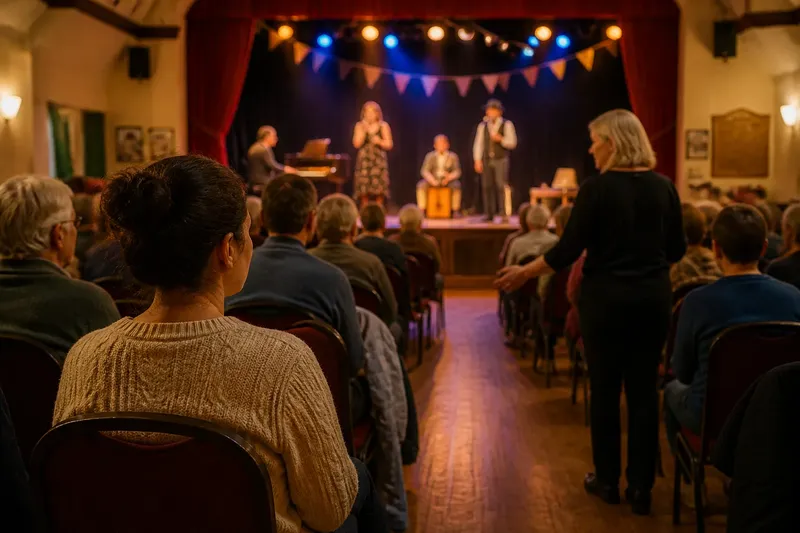
Say you arrive at a village hall and find that your seat is near the centre of a row. You realise you may need to leave before the final act to catch a bus. During the interval, you quietly ask a steward whether there is an aisle route and move only if they confirm it will not disturb other guests. You now know how to leave at the next break without blocking the row or interrupting a performer.
It is not worth trying to anticipate every possible change in the running order. Knowing where the exits are, whom to ask for help and how to move respectfully is enough for most visits.
How should you respond to an act?
Ordinary applause at the end of a performance is a clear way to acknowledge the people on stage. During a song, monologue or quiet passage, listen rather than talking over the performer. Laughter, a spoken response or clapping along may fit a particular act, but follow an invitation from the performer or host if you are unsure.
You can appreciate a performer’s effort without enjoying every act. Stay considerate: avoid distracting remarks, give the next performance a fair hearing and respond in a way that feels comfortable to you. There is no need to force an enthusiastic reaction.
Recording rules vary, so look for a notice or ask an organiser before taking photographs or filming. If recording is not clearly permitted, keep your phone away. This protects the concentration of performers and the privacy of other audience members.
What might a first-time audience member wonder?
Do I need to understand every act?
No. A performance may use unfamiliar references, music or traditions. You can follow its mood, movement and timing without knowing every detail.
Can I leave before the show ends?
Yes, if you need to, but plan to leave during a pause when possible. If you expect to go early, choose an aisle seat or ask venue staff about a suitable route.
When should I clap?
Applause at the end of an act is usually appropriate. If the performance continues through a quiet pause or one movement flows into another, wait for a clear ending or the host’s cue.
Who should I ask if I need help?
Ask an usher, steward, venue employee or event organiser, depending on who is available. They can explain seating, exits and access arrangements more reliably than another audience member who may not know the venue.
What makes leaving easier?
At the end, wait for any closing words to finish before moving into the aisles. If you want to thank a performer or volunteer, offer a brief word when they are free; avoid interrupting while they are packing equipment or speaking with others.
For your next first visit to a community variety night, remember the practical sequence: check the venue details, settle your belongings, follow the room’s cues and ask staff when you are uncertain. Knowing how to manage these small decisions leaves you freer to enjoy the performances in your own way.